
From Handcrafted Prints to Sustainable Construction and Organic Sculpture, These Designers Are Expanding the Boundaries of Contemporary Design
Brazil’s creative landscape is entering a new chapter—one shaped by women whose work challenges conventions, expands material possibilities, and redefines what authorship means in contemporary design. As the world looks toward 2026, three Brazilian creators stand out for their ability to merge technique, identity, and experimentation into powerful artistic statements. Rita Comparato, Heloisa Faria, and Regina Dabdab each embody a distinct approach to making: from handcrafted prints and expressive silhouettes to sustainable garment construction, to sculptural compositions born from organic matter and memory. Together, they represent a new wave of Brazilian creativity—one that is bold, intentional, and deeply rooted in personal vision.

Rita Comparato: Fashion as Artistic Expression
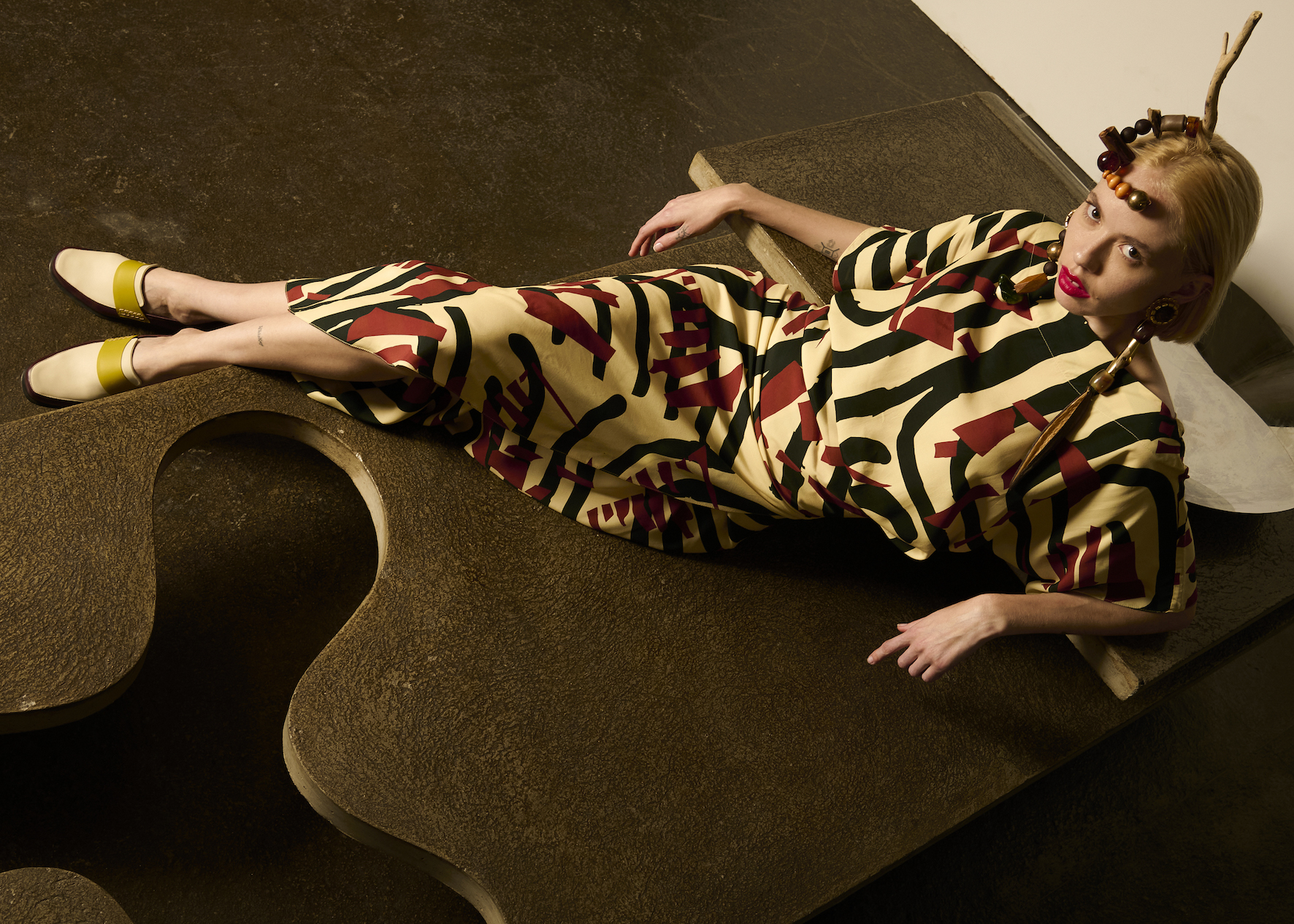
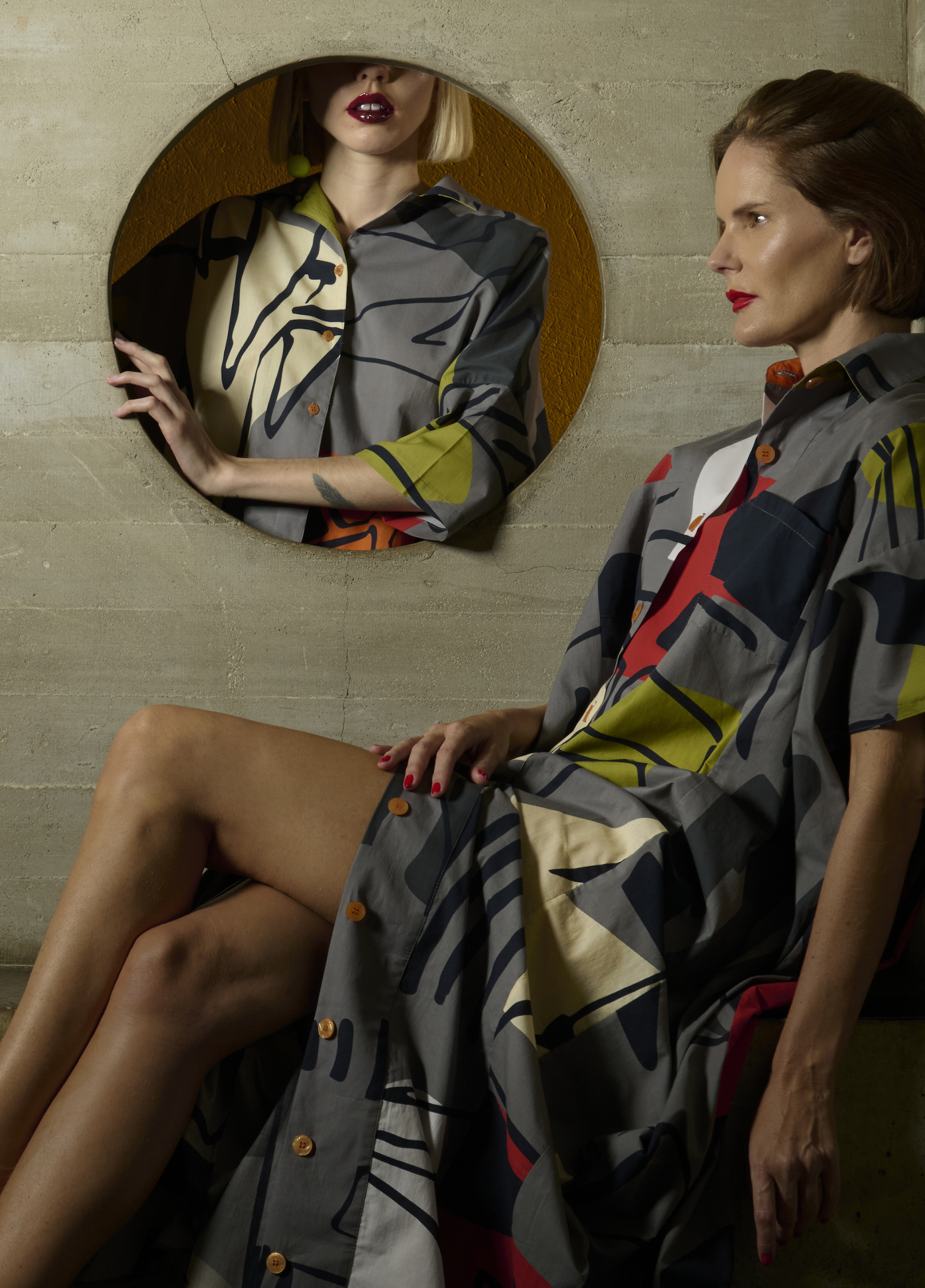
Rita Comparato helped define Brazilian fashion in the early 2000s with the iconic brand Neon, and today she continues her authorial journey through Irrita, a project where clothing becomes a canvas for artistic expression. Her work is marked by powerful silhouettes and handcrafted prints that dissolve the monotony of everyday life.
In Irrita, Comparato transforms casual garments—sarongs, chemises, jumpsuits—into wearable art. Her abstract, colorful, and intensely expressive prints are designed to energize the wearer, creating what she calls “appreciative prints” that captivate and command attention.
Her studio in Pinheiros, São Paulo, is a creative sanctuary where technique, irreverence, and imagination coexist. There, she produces not only her garments but also the paintings that inspire them, reinforcing her belief that fashion is a channel for personal authorship.
Her Collection 21 – Partidas e Tormentas reveals the emotional depth behind her creative process. Partidas, drawn in ink, oil pastel, and gouache, reflects the difficulty of leaving, letting go, and embracing the unknown. Tormentas, created in ink and collage, explores the idea that every storm is either collapse or crossing—an invitation to listen to the wind, find direction, and dare to set sail. Comparato’s work reminds us that creativity is both refuge and propulsion.
Heloisa Faria: Sustainability, Inclusion, and the Power of Construction
Since founding her eponymous brand in 2010, Heloisa Faria has become one of the leading names in Brazil’s authorial and sustainable fashion movement. A graduate of Faculdade Santa Marcelina, she has presented more than 20 shows at São Paulo Fashion Week and Casa de Criadores, solidifying her presence in the country’s most influential fashion arenas.
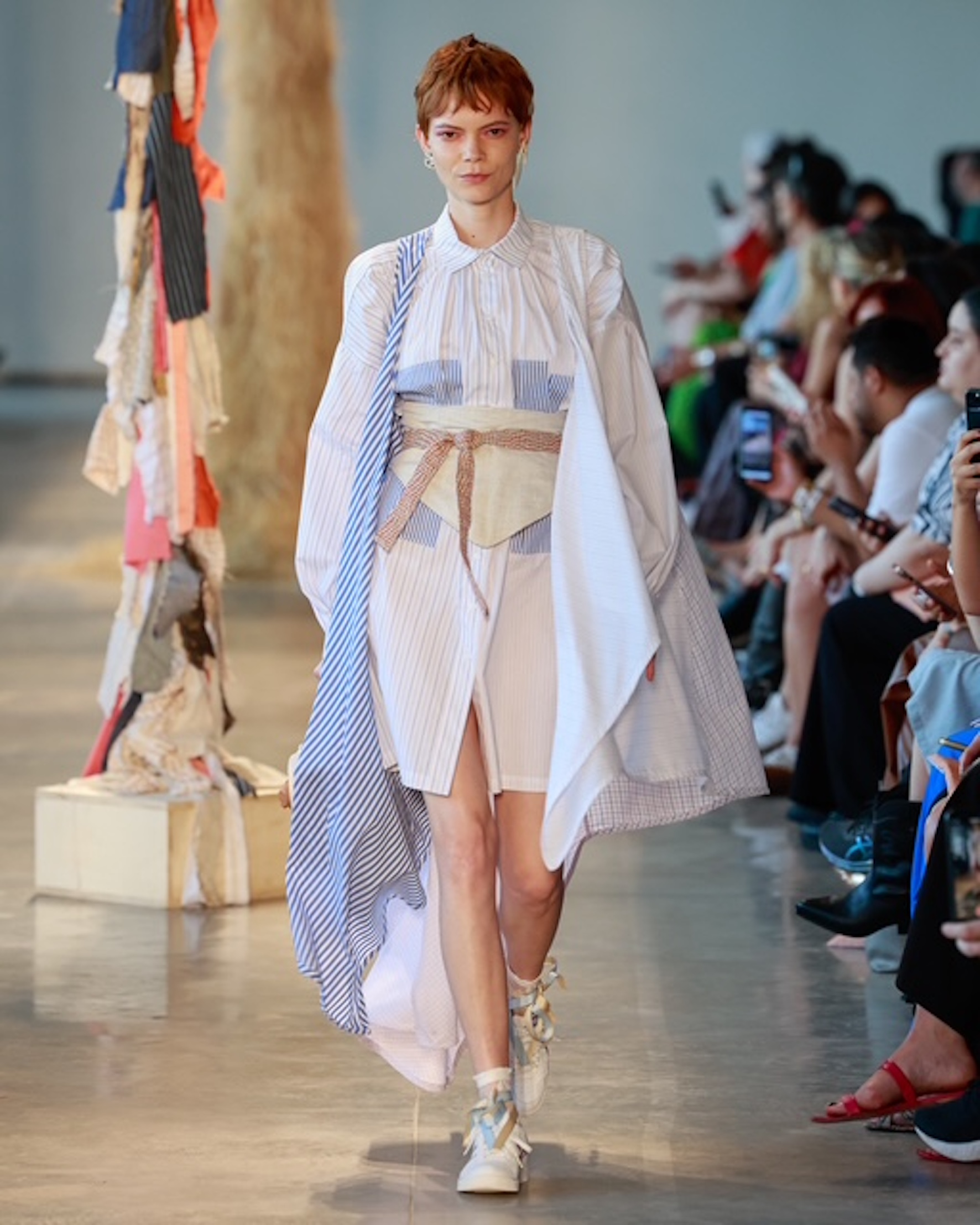
Her work is grounded in sustainability, the celebration of diverse bodies, and continuous research into garment construction. Faria works with upcycling, exclusively Brazilian textiles, and collaborations with institutions such as Sou de Algodão, Senac, and major national weaving mills.
Known for her exceptional craftsmanship, she creates for independent women and men who seek clothing beyond trends—pieces that privilege unique, modern, and inclusive design. Her signature lies in nontraditional volumes in shirting and experimental color‑mixed denim, but she also develops exclusive pieces through upcycled materials and moulage techniques. Vintage prints coexist with exclusive collaborations or prints created by the designer herself.
Her brand is both timeless and experimental. For Faria, the wearer shapes the garment—not the other way around. Comfort and quality are central, encouraging each person to build their own language of style and integrate the brand’s universe into their personal repertoire. Her work empowers wearers to claim their individuality through thoughtful, responsible design.
Regina Dabdab: Sculpting Nature, Memory, and Transformation
Artist and designer Regina Dabdab brings a multidisciplinary perspective to Brazilian creativity. Born in São Paulo and trained in fashion design at FASM, she deepened her expertise in footwear in Milan and jewelry at Studio Berçot in Paris, where she lived for 13 years. Her handcrafted, organic works draw inspiration from the flora of the Amazon and the concrete landscapes of São Paulo.
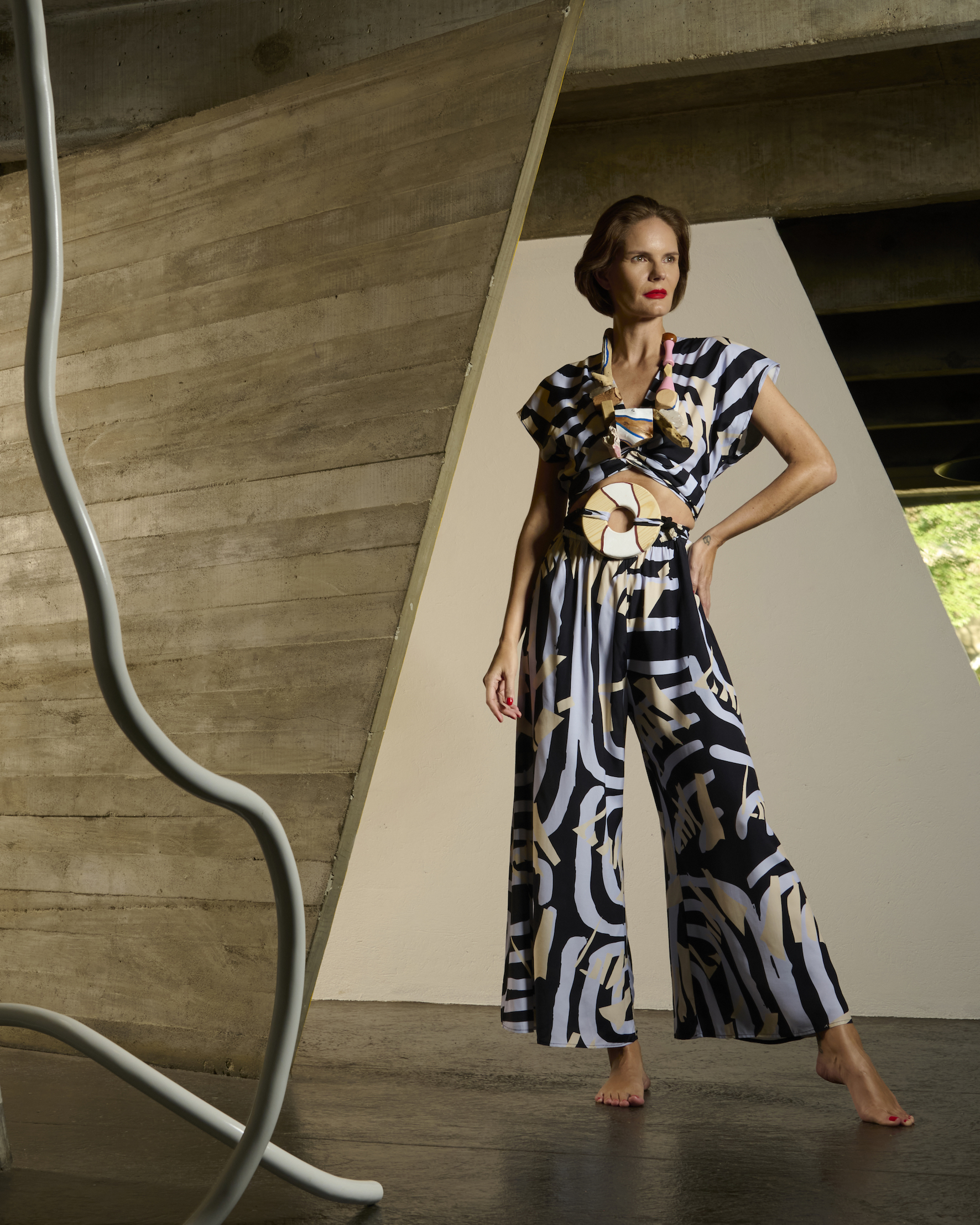
Dabdab’s pieces balance wood, crystals, seeds, and mineral materials shaped by time, wind, sea, and territory. Her attentive gaze toward the pure and the raw explores the materiality and beauty of natural forms. Each element carries memories of the places where it was found, and her process becomes a story of transformation. She reorders and reappropriates contrasting materials like a puzzle, reconnecting them with their inherent energy and shamanic power.
Her practice aligns with the idea of the “collector,” as defined by filmmaker Agnès Varda in The Gleaners and I. Like Varda, Dabdab gathers fragments of disappearing worlds, reinterpreting them through collage-like narratives that implicate the author within the work itself.
Her recent trajectory includes collaborations with artists such as Daniel Lie and Raquel Garbelotti, participation in exhibitions at SP‑Arte, Taller Zaragoza, Galeria Marli Matsumoto, and the Museu da Inconfidência, as well as her first solo exhibition following a six‑month residency at Casa Cunha Lima. Her 2024 presentation Aguaceiro further cements her place in Brazil’s contemporary art landscape.
Dabdab’s work is a testament to the power of reinvention—an artistic practice that honors memory, embraces contrast, and transforms the overlooked into the extraordinary.

Why These Women Matter in 2026
Rita Comparato, Heloisa Faria, and Regina Dabdab represent three distinct yet interconnected visions of Brazilian creativity. They challenge conventions, honor their roots, and expand the possibilities of what fashion and art can communicate. Their work is emotional, political, ecological, and deeply personal—an expression of authorship that resonates far beyond aesthetics.
In 2026, as the world seeks authenticity, sustainability, and meaningful expression, these three designers stand out as women who inspire. They remind us that creation is an act of courage, and that through their hands, Brazilian artistry continues to evolve, provoke, and illuminate.