In a world where scientific leadership often follows traditional paths, Karina G. Coronado Apodaca stands as a reminder that brilliance can rise from unexpected beginnings. Born in Sonora and now Associate Director of the Regional Department of Sustainable and Civil Technologies at Tecnológico de Monterrey in Guadalajara, her journey spans continents, disciplines, and profound personal reinventions. Her story is one of resilience, responsibility, and reinvention, proof that purpose can be built from the ground up, and that women who don’t fit the mold often become the ones who redefine it.
“I have never been ashamed of having cleaned houses; on the contrary, it fills me with pride because I had a clear purpose and I achieved it
Karina, you were born in Sonora, and today you serve as Associate Director of the Regional Department of Sustainable and Civil Technologies at Tecnológico de Monterrey in Guadalajara. Which part of your personal story has been your most constant driving force?
Honestly, I’ve always considered myself someone who moves forward. I can’t think of a moment in my life when I lived passively. There has always been this need in me to strive for more. I haven’t always known why, but there is a very clear turning point: the birth of my daughter. In that moment, movement stopped being just personal ambition and became a responsibility. It was no longer just about advancing; it was about building a different reality for someone who depended on me.
She also arrived during a financially difficult time, which made it even more evident that changing my reality wasn’t optional; it was indispensable. Because it’s one thing to settle for what you have, and something very different to bring a life into the world without being able to offer her what she deserves. If I had to summarize it, I’d say my greatest driving force has been my daughter. But throughout everything, my greatest support has been my family.
Many times, it’s not that the path doesn’t exist, it’s that we can’t imagine how far it can take us
In your youth, you worked in the United States cleaning houses to pay for your studies. What did that experience teach you about dignity, effort, and purpose?
That experience is one of the most defining of my life. I worked for a farming family and, even though I was an employee, I was never treated as just that. They included me in dinners, outings, and celebrations. Their daughters lent me clothes, gave me gifts, and made me feel like part of their family. That taught me two things that have stayed with me forever. First, that every person has value, regardless of their context or socioeconomic level. And second, that a small gesture can change someone’s day or even their life.
I also understood that any work done with purpose is dignified. I have never been ashamed of having cleaned houses; on the contrary, it fills me with pride because I had a clear purpose and I achieved it. And perhaps most importantly: I learned not to take anything for granted. I know exactly what it cost me to get here. I know what it means to start from the bottom. And that’s why I protect what I’ve built. Because my story doesn’t begin in a laboratory, it begins with cleaning someone else’s bathroom. And I will never forget that.
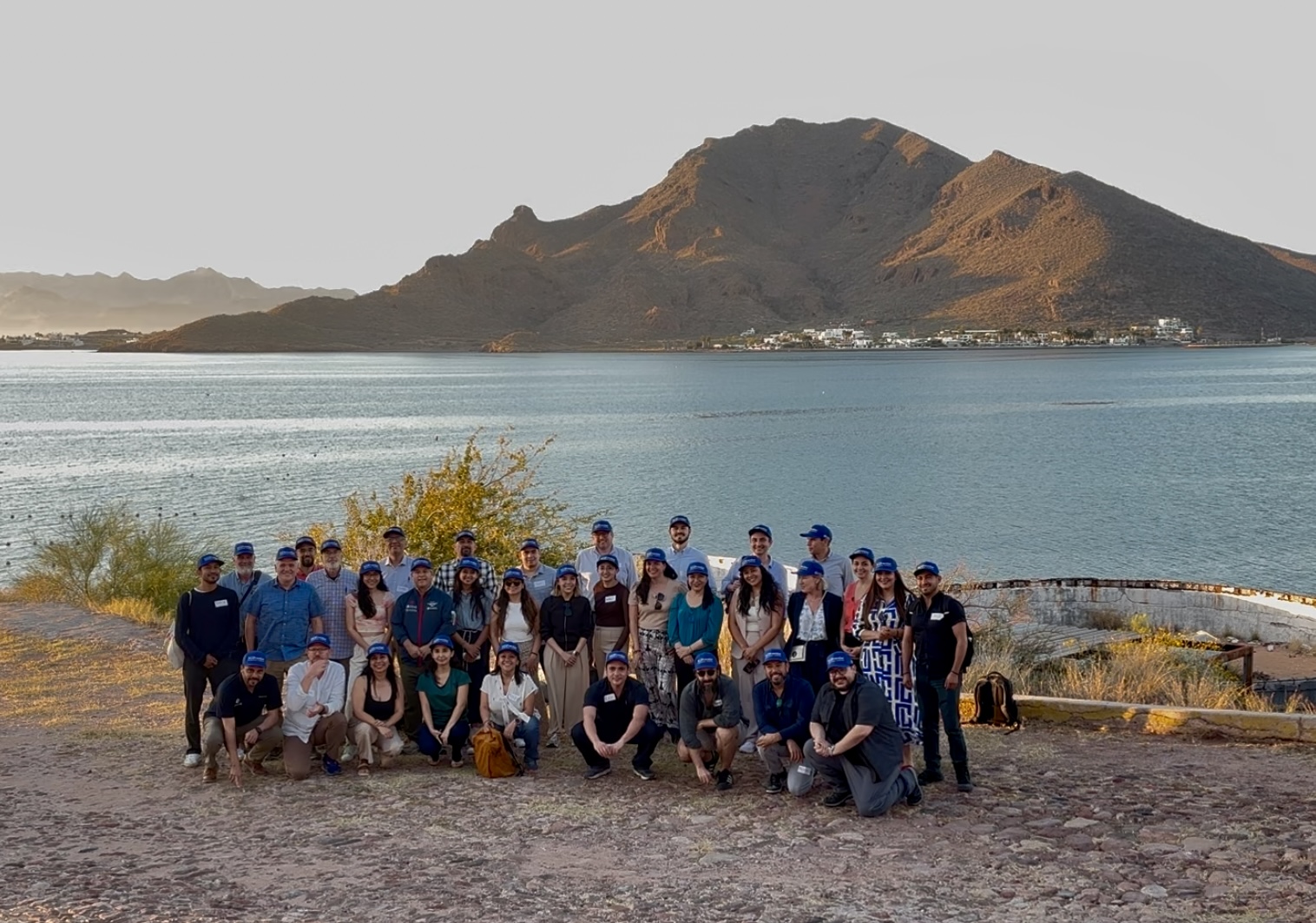
Was there a moment when you clearly felt that science was your path, even when it seemed like an unlikely space for a young woman from northern Mexico?
Yes, there was a clear moment. When I started engineering, I actually wanted to teach mathematics. But very early on, I began getting involved in research projects first as support, and little by little, each experience confirmed that there was something more there. Each project, each small achievement, left me with the feeling of wanting to continue, of knowing that this was the path. What I never knew was how far I could go. My aspirations were much smaller than what I eventually achieved. And I think that’s important: many times, it’s not that the path doesn’t exist, it’s that we can’t imagine how far it can take us.
You’ve built an international career working in Mexico, France, Chile, and the United States, including time at MIT. What does it mean to carve out a place for yourself in those environments coming from such a different reality?
Something I must acknowledge is that I always felt a constant need to prove that I deserved to be there. I arrived in all these spaces through scholarships and competitions, but even then, once I was there, I felt I had to validate my place again and again. And not because anyone demanded it, but because it came from within me. Over time, I understood that this impulse was also part of my growth. The biggest challenge, however, wasn’t academic; it was social. Adapting to contexts, codes, and ways of interacting that were completely different from my own. Learning how to navigate spaces where I hadn’t grown up.
And that meant accepting something important: the world wasn’t going to change just because I arrived, but I could learn to navigate it without losing who I am. Because in the end, carving out a place in those environments wasn’t just about proving I could be there, it was about learning to inhabit places where there hadn’t been a space designed for someone like me.
Molds have limits. You don’t. You don’t have to fit into something that wasn’t designed for you. Grow, evolve, transform. And let your only limits be your values and your convictions
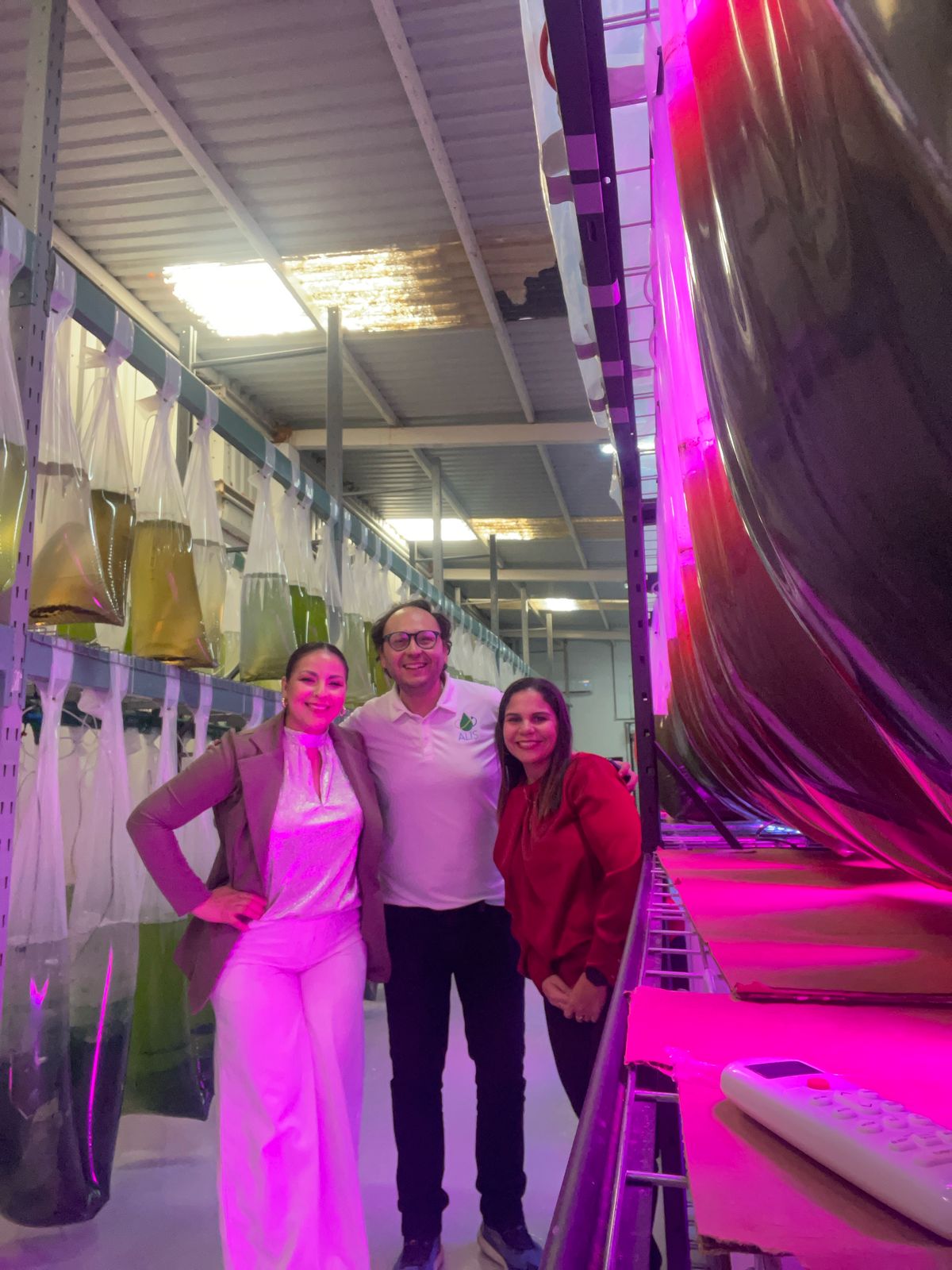
You lead projects that integrate biotechnology, engineering, and artificial intelligence. What excites you most about this convergence and where do you think it will take us?
What excites me most is collaboration. Being able to work with brilliant people from different disciplines and seeing how, by integrating such diverse knowledge, we build solutions that no single field could achieve on its own. It’s like watching many parts come together into a whole. And I think that’s where the real potential lies, understanding that real problems don’t belong to a single discipline, and therefore, solutions can’t be solved either. This convergence is leading us to create more complete, more applicable solutions with real impact. And it also reminds us of something very important: we don’t grow alone, we grow by adding.
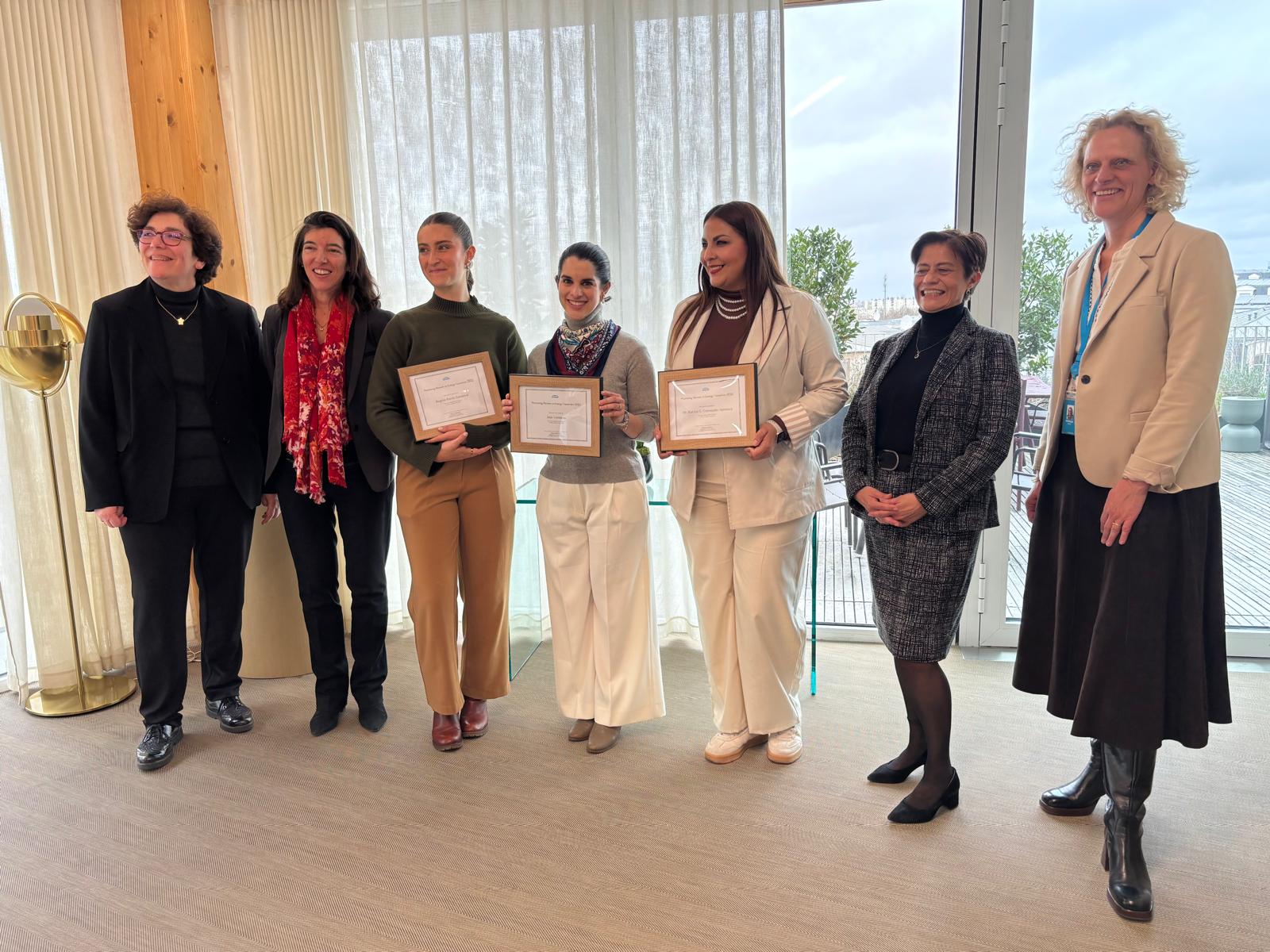
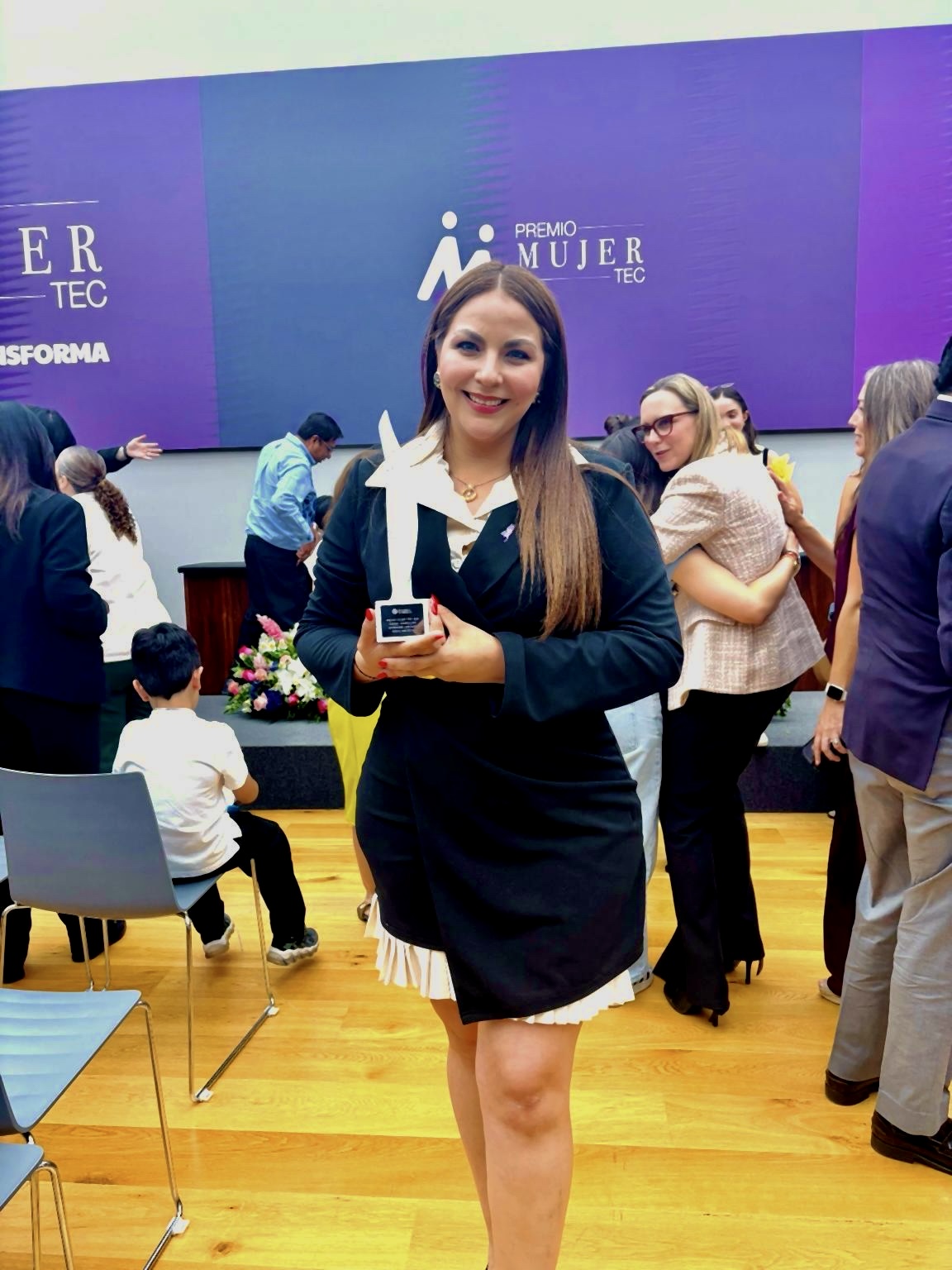
The French government recognized you as one of the outstanding Mexican women in science, and you also received the Mujer Tec Award. What do these recognitions represent in your journey?
These awards represent validation, momentum, and visibility. I’ve spent more than ten years working in research, often in roles that aren’t always visible, being part of the “et al,” contributing without necessarily being at the front.
These recognitions change that. They pull me out of the shadows and place me on the map. Today, when topics like sustainability, energy, or the circular economy are discussed, my name can be part of that conversation. And that is very powerful. On a personal level, it’s also a reminder of how far I can go. Because there was a time when my dream was to be a teacher at my local school. Then it grew to the regional level, and then to a university like Tecnológico de Monterrey. And today, my work has an international reach. And that opens up a new question: if this were possible, what else is?
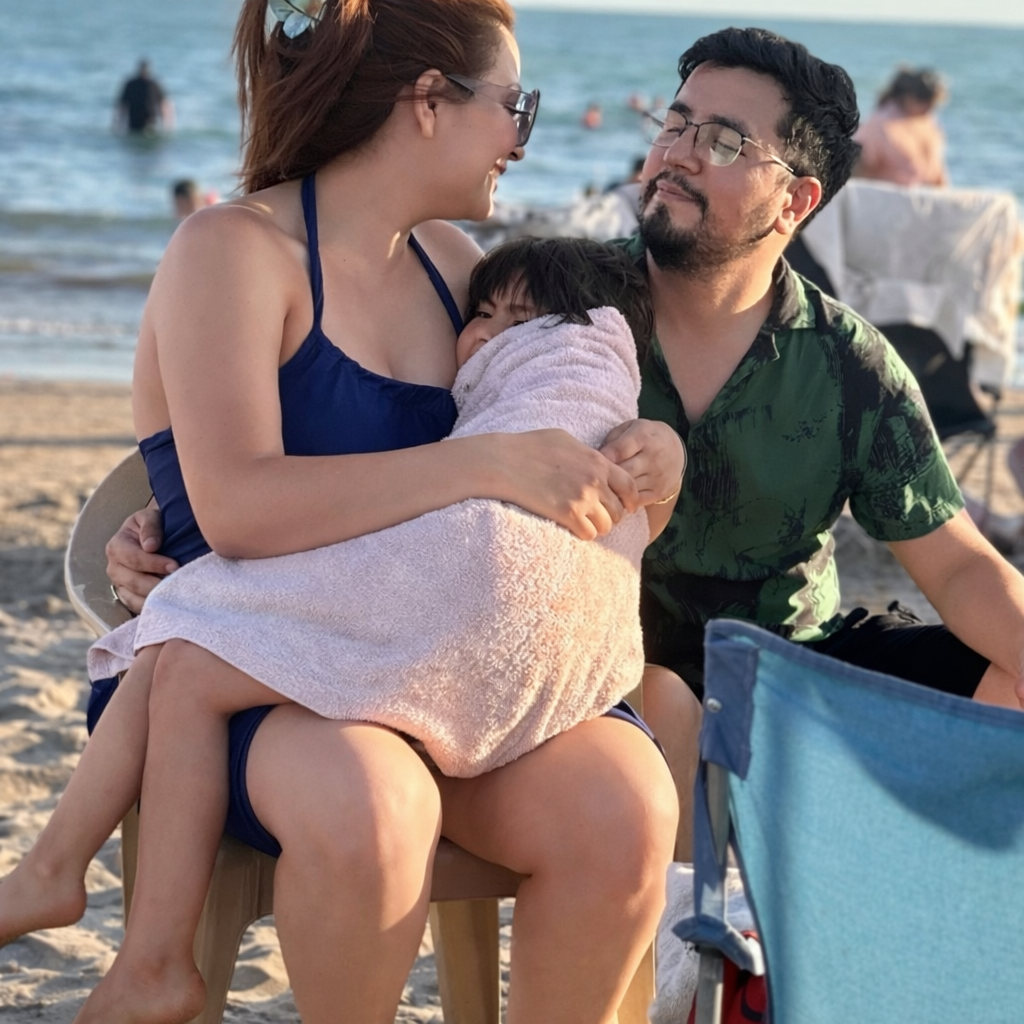
You are the mother of a daughter with mild autism. How has motherhood transformed your understanding of success, time, and empathy?
My daughter completely transformed my understanding of success. I’ve always been very work-focused, but her arrival and especially her diagnosis forced me to rethink my priorities. I understood that success isn’t always recognition or a professional achievement. Sometimes it’s hearing a new phrase from my daughter. Sometimes it’s something much smaller, but far more meaningful. She also made me more aware of differences, of opportunities, of privileges.
I got that what is a challenge for some would be a dream for others. And that not everyone has access to the same tools. And that changed the way I see others. Less judgment, more empathy. And above all, a willingness to support.
You’ve gone through a divorce, a new relationship, changes of city, and growing professional responsibilities. What has rebuilding yourself multiple times taught you?
I’ve learned that there isn’t just one version of me. There are many. And if one stops working, another can always emerge. That has taught me to trust my processes, to be patient with myself, and to understand that rebuilding is also part of growth. I also learned the importance of mental health and professional support during difficult moments. And something very important: I learned to set boundaries. To have clarity about what I want both personally and professionally. But above all, I learned not to stop trusting myself.
From your current leadership role, what kind of culture and leadership model do you hope to build for your students and for the women who come after you?
I would like to build a leadership model based on example, but also on real accompaniment. Not just inspiring through achievements, but through the process of what it means to grow, make mistakes, and rebuild. I want to create spaces where people feel they can develop, even if they don’t fit traditional molds. And I would like my impact to be measured not by recognition, but by the people I supported, the opportunities I helped open, and the decisions I helped transform.
If you could leave a message for girls and women who feel they “don’t fit” traditional molds, what would you tell them based on your own story?
Molds have limits. You don’t. You don’t have to fit into something that wasn’t designed for you. Grow, evolve, transform. And let your only limits be your values and your convictions.